
How Bench Warrants Work in Mason County
A bench warrant is an order from a court tied to a person’s failure to meet a required court obligation. In Mason County the likely venue depends on the case: JP Precinct 1 handles its traffic and criminal matters, Mason Municipal Court handles city ordinance and traffic matters, and County or District Court handles its own causes. The research found no single public warrant register across those courts.
A missed appearance may lead to an FTA process. An unpaid judgment may lead to a capias pro fine after the required hardship hearing and court order. Child-support enforcement has a separate family-law route. Ask what term the court used, because the label changes the next step.
Mason County Missed-Date Notice
For certain initial-setting failure-to-appear warrants in justice or municipal court, Chapter 45A requires notice with a new date and time, court address, payment-alternative information, possible jail credit, and the consequences of missing the date. The person may request an alternative date or time. This state rule gives a reader specific questions to ask JP1 or Mason Municipal Court.
It does not establish a Mason walk-in counter or promise that an unannounced visit will avoid custody. Ask whether notice was sent, which date applies, and how the court wants a voluntary appearance arranged. Keep the notice and any delivery details when calling.
Bench Warrant Issuance in Mason County
The issuing judge or justice acts under the rules for the case and court level. For an initial-setting FTA in a justice or municipal court, Texas Code of Criminal Procedure art. 45A.104 sets notice steps and allows an alternative appearance time. If the person voluntarily appears and makes a good-faith effort to resolve the warrant before execution, the statute directs recall in the circumstances it covers.
Mason County’s public pages do not show a warrant entry system, notice template, or local recall form. A person should call the court that scheduled the appearance and ask whether the order remains active, whether a date can be reset, and what proof or filing the clerk needs.
County Court and JP Case Paths
Not every missed date uses the same process. A JP or municipal case can involve an initial-setting FTA, a later hearing, or a judgment that remains unpaid. District Court and County Court matters have their own calendars and court staff. The County and District Clerk pages publish docket material, but no local policy says that a docket entry itself recalls a warrant.
If the notice is unclear, use the cause number to reach the court that set it. Ask whether the date was an initial setting, what notice was sent, and whether a separate warrant or capias has been issued. The clerk can route a case question but cannot replace legal counsel.
How Bench and Arrest Warrants Differ
A bench warrant usually follows a missed court obligation in an existing case. An arrest warrant begins with a sworn complaint or probable-cause affidavit and names an alleged offense. Both can authorize an arrest, but the court question differs: one asks what appearance or judgment must be addressed, while the other asks about the charge, bond, and next court proceeding. See the Mason County arrest-warrant process for the second route.
| Feature | Bench Warrant | Arrest Warrant |
|---|---|---|
| Trigger | Missed hearing or court obligation | Complaint and probable cause |
| Issuing official | Judge in the court with the case | Magistrate or judge |
| Case context | Existing case and missed duty | Criminal accusation named in the order |
| Next step | Ask the issuing court about reset or recall | Confirm charge, bond, and appearance terms |
Mason County Capias Pro Fine Rules
A capias pro fine is connected to an unpaid judgment, not simply a missed first appearance. Under art. 45A.259, a court must address undue hardship before issuing one for failure to satisfy a judgment. If hardship is found, the court considers other ways to satisfy the amount. The capias must state the judgment amount and can be recalled after qualifying notice or a voluntary good-faith effort before execution.
The official Chapter 45A text contains the notice, bond, hardship, and recall rules used by justice and municipal courts.
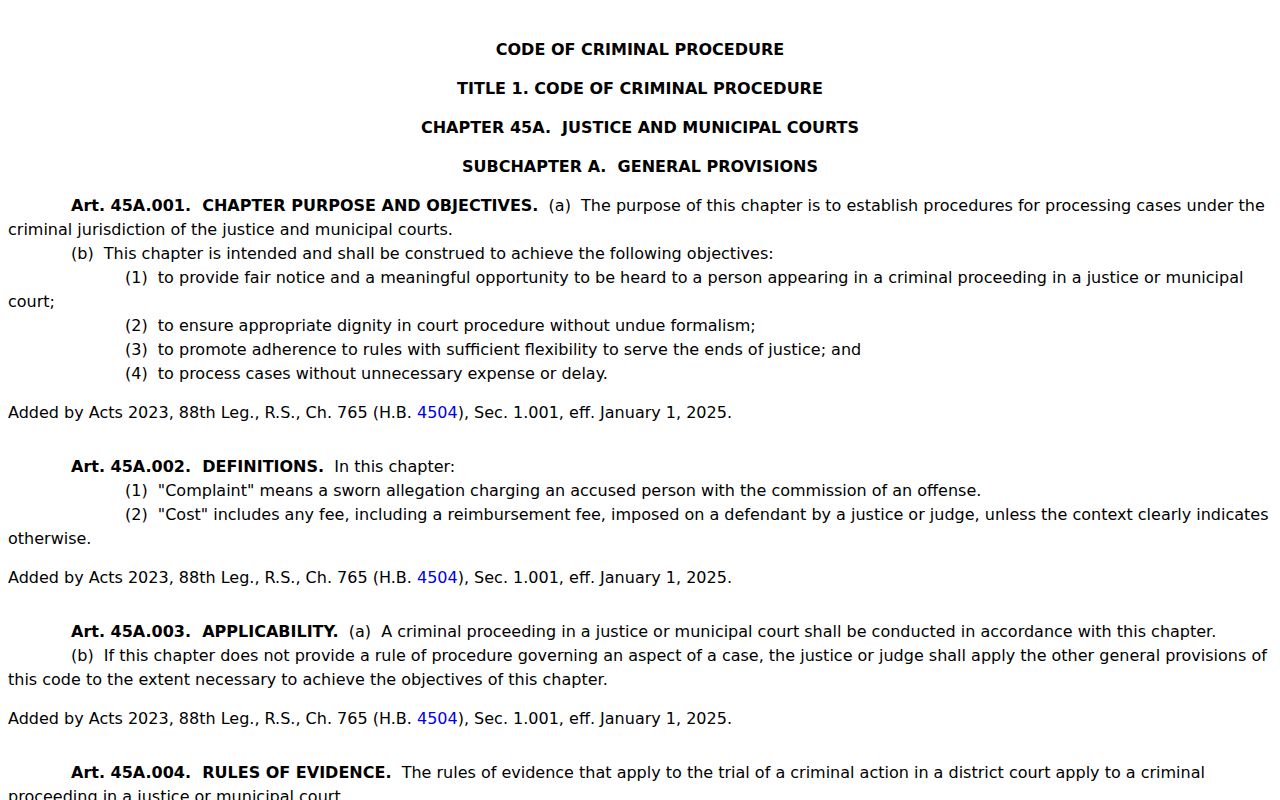
The statute supplies the legal framework; Mason’s local page does not publish a walk-in or recall form.
Clearing a Bench Warrant in Mason County
Contact the issuing court before traveling. Ask whether a voluntary appearance can be set, what the court requires to recall the warrant, and whether an attorney should file a motion. If a fine or judgment is involved, ask about payment, hardship review, community service, or installments. The court decides which route applies.
- Use the cause or citation number to identify the court and ask for current status.
- Ask whether the matter is an FTA warrant, bench warrant, or capias pro fine.
- Get instructions for a hearing, voluntary appearance, motion, payment, or bond.
- Keep the court’s written receipt or order and confirm any next date.
Caution: Do not assume a bench warrant expires or that a payment alone recalls it; confirm the required step with the issuing court.
JP1 Fine and Payment Questions
JP Precinct 1 publishes payment choices and says partial payments need court permission. It lists a $15 state fee when a fine is not paid within 30 days of the appearance date. Those are useful details for a fine-related case, but they do not establish the current warrant status or the amount due on a particular cause.
Ask the clerk whether the court will set a hardship hearing, accept an approved payment plan, or require an appearance. Chapter 45A permits notice of payment difficulty through a voluntary appearance, motion, letter, or another method the court establishes. Mason has not posted a standard hardship form or recall window.
Mason County Courts That Issue Bench Warrants
Use the citation, summons, or docket to identify where the case was filed. JP Precinct 1 handles lower-court traffic and criminal matters; Mason Municipal Court handles city ordinance and traffic cases; the County Clerk handles County Court files; and the District Clerk keeps District Court pleadings. Each court answers for its own cause.
The sheriff serves as a law-enforcement contact, not the office that resets the case or grants a recall. For general local routing, the Mason County warrant-check steps identify the separate court and sheriff channels.
Mason County Family Case Exceptions
Child-support enforcement can involve family-court process and a capias or warrant under Family Code Chapter 157. The District Clerk page links the Attorney General Child Support Program, but Mason County publishes no child-support warrant list. A family case may also have access limits. Ask the family-court clerk or authorized child-support office about the case and what compliance step is recorded.
The Family Code Chapter 157 text describes child-support enforcement routes.
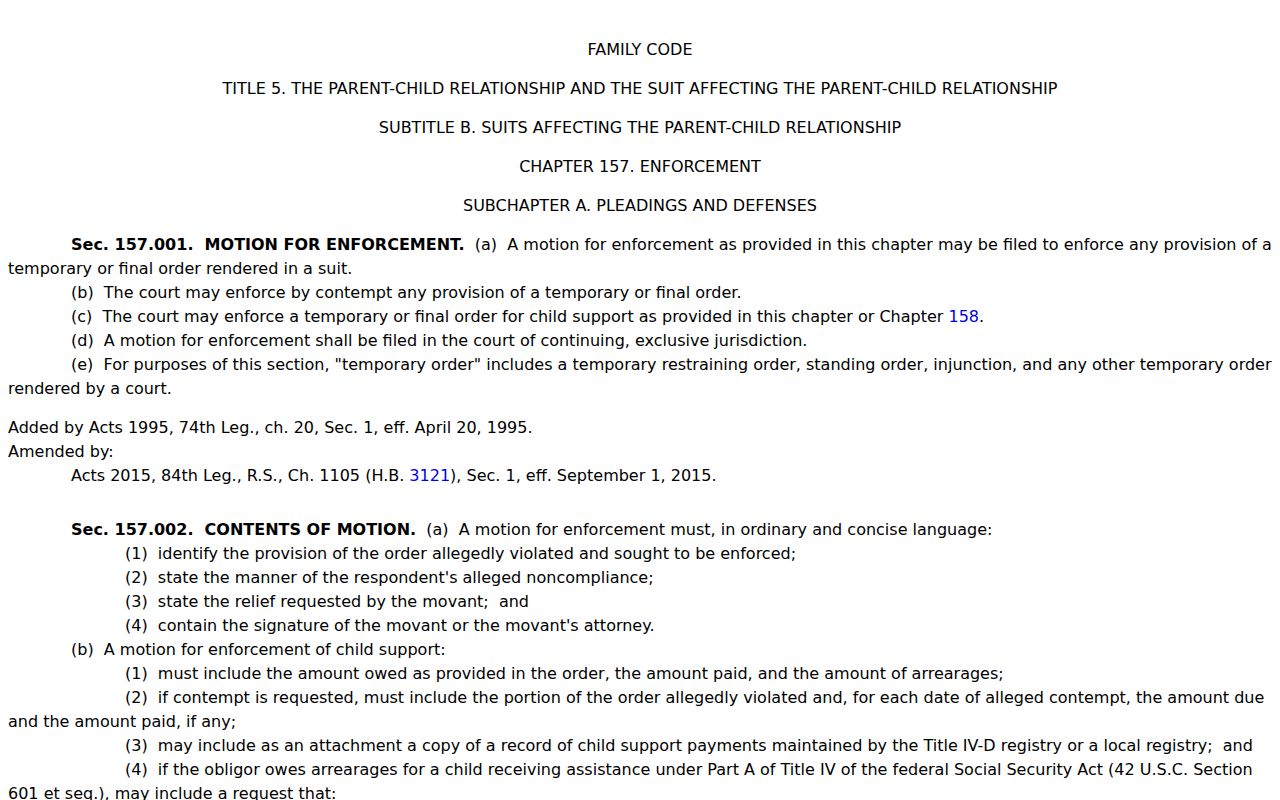
Do not treat the general sheriff page as a family-case search tool.
Juvenile law-enforcement files have separate safeguards under Family Code Chapter 58.
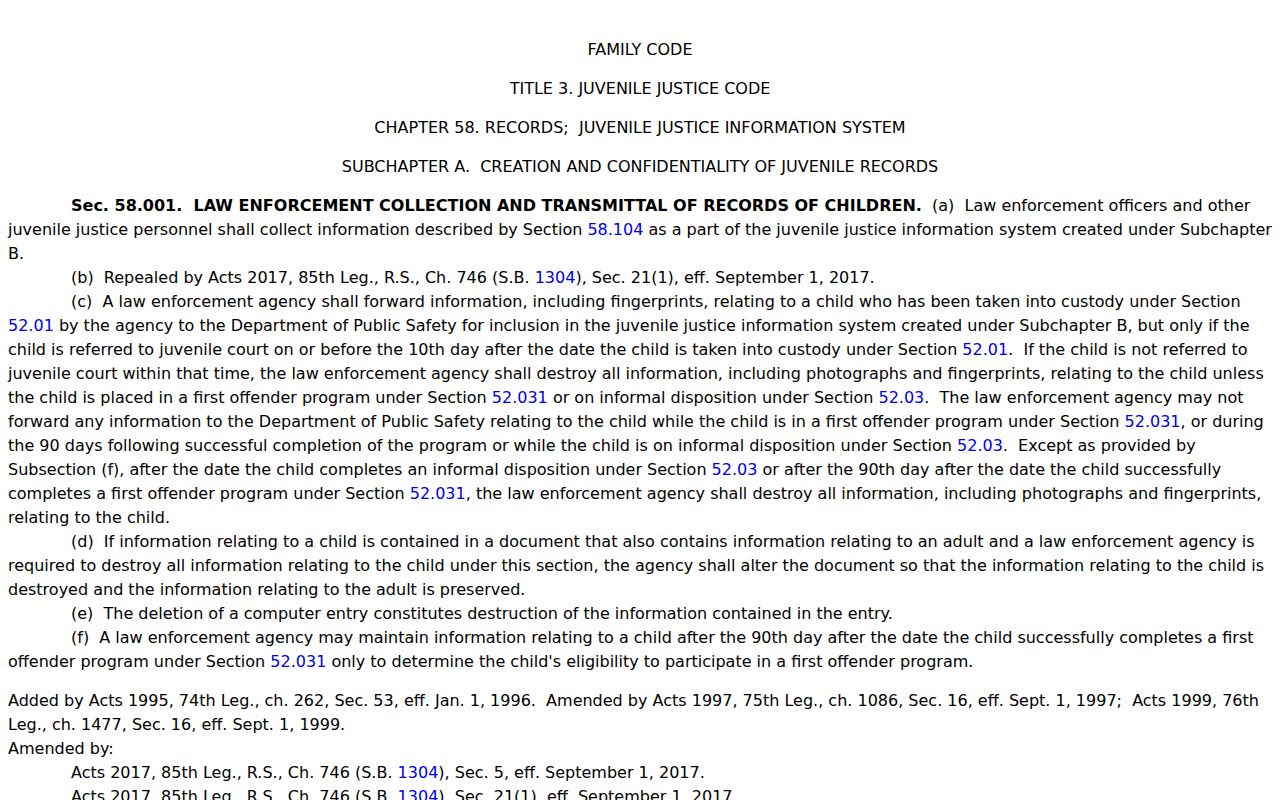
That confidentiality rule is another reason a public search cannot cover every court matter.