
How Arrest Warrants Work in Mason County
In Texas, an arrest warrant is a written order from a magistrate telling a peace officer, or a person the order names, to bring someone in. The probable-cause basis comes from a complaint or a sworn affidavit. Justice and municipal cases add their own rule under Chapter 45A for these orders. District Court and County Court matters run on their own dockets instead. None of that means the paper is public. Mason County posts no completed warrant documents and offers no public arrest-warrant search on its official pages. The court or magistrate that handled the case can explain the charge, the order, its current status, and the next setting. An old docket sheet will not answer those questions, so ask the court that issued it.
Mason County Arrest Warrant Affidavits
The complaint or affidavit supplies the legal basis for issuing a Mason County warrant, but that does not make the document public. An unserved order or an investigative file may stay closed to inspection. Ask the clerk which record exists and whether it can be released. The Code of Criminal Procedure also treats the warrant itself as distinct from the complaint and from the later return showing execution. The Texas Chapter 15 text lays out the general arrest-warrant form and the rules for issuing one.
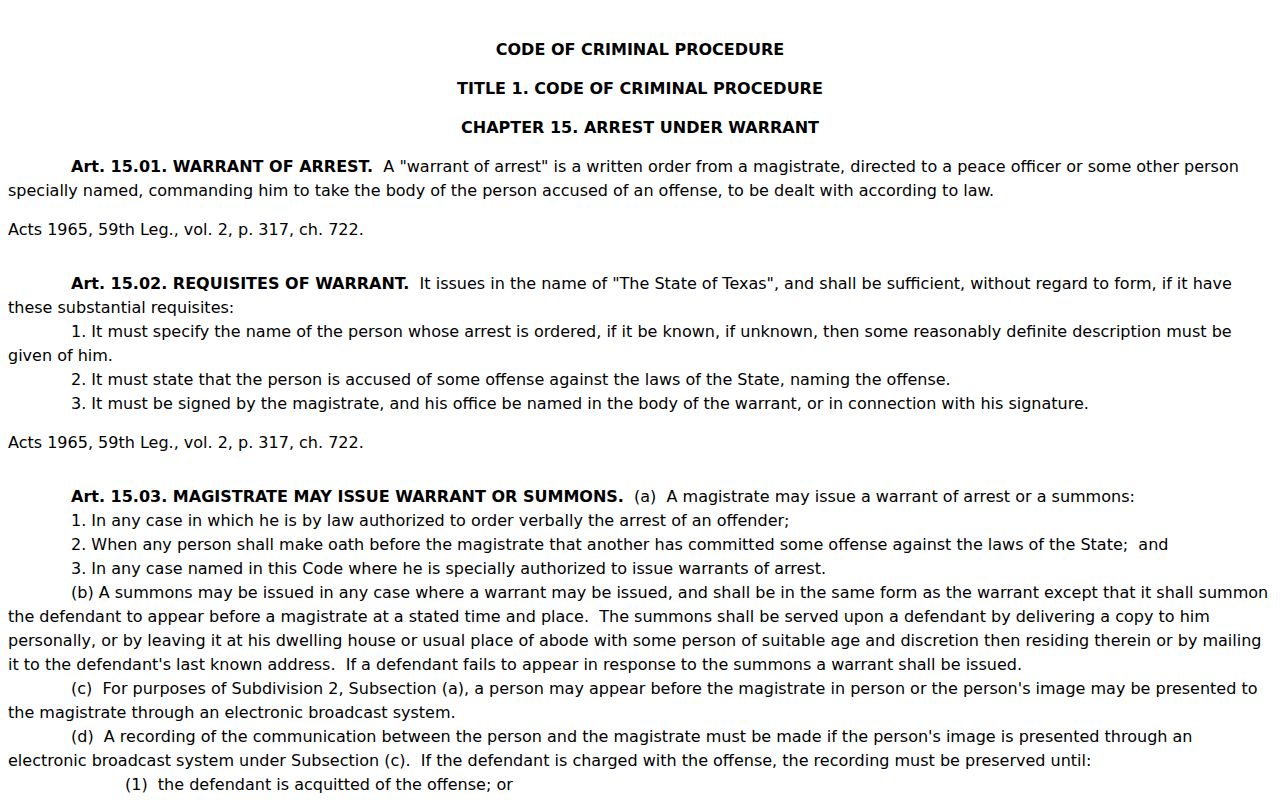
These statutes set the legal structure of the order. They do not tell you the current status of a Mason County case.
Arrest Warrants: What They Contain
Chapter 15 spells out what a general arrest warrant must contain. A justice or municipal-court warrant under Chapter 45A carries similar identifying details. Mason County publishes no local template or standard warrant-number format, so use the court's cause number rather than guessing at a pattern.
| Case number | Format depends on issuing court; request the cause number from the clerk. |
|---|---|
| Named person | The accused person’s name or a reasonably definite description. |
| Offense | The warrant must name the offense alleged. |
| Direction | Names the proper peace officer or a person specifically directed. |
| Command | Orders the person taken before the issuing authority at the stated time and place. |
| Signature and office | Signed by the judge or magistrate, with the office identified. |
Mason County Has No Warrant Number Pattern
Mason County publishes no public warrant example, numbering key, or search-results page. So treat any sample number format as a guess, because a made-up year-and-sequence code could send you to the wrong file. A docket's cause number identifies the court case, yet a law-enforcement system may track the order under a different identifier. When you call the County Clerk, the District Clerk, or the issuing court, ask which number a records request needs and whether the office can confirm a later return or recall entry. A number copied without the court name and case date can point to the wrong record entirely.
How Warrants Get Served in Mason County
A warrant directs the named officer, or the proper officer, to execute it. Who actually does that varies. Mason County lists the Sheriff's Office and dispatch as its public law-enforcement contacts, but its pages name no dedicated warrant unit and do not describe how every court assigns service. The City of Mason directory shows no separate police-department page either. Do not assume the sheriff executes every municipal order. If your question concerns service or custody, ask the Sheriff's Office which agency handles it. If it concerns the charge, bond, or recall, call the issuing court instead. Mason County publishes no booking route, bond window, or walk-through schedule, so phone ahead before you show up anywhere.
Mason County Service and Court Roles
The line between a court order and its execution matters here. The District Clerk keeps District Court pleadings, while the County Clerk handles County Court files. The Mason County Sheriff's Office is the documented service contact, and the local lower courts issue their own process within their jurisdiction. A court may direct process to an appropriate peace officer, but no Mason public source names one universal serving agency. Keep your question narrow when you call. Ask which office confirms the order, which agency handles service, and where the person should report if the court sets an appearance. The sheriff can route a service question, but only the issuing court can set the terms of the case.
Arrest Warrants, Summonses, and Bench Warrants
A summons orders someone to appear in court without taking them into custody first. An arrest warrant commands an arrest on the legal basis stated in the order itself. A bench warrant, meanwhile, follows a failure to meet an obligation a court already imposed. Read up on the separate Mason County bench-warrant process before treating the terms as one and the same.
| Feature | Arrest Warrant | Summons | Bench Warrant |
|---|---|---|---|
| What it orders | Arrest and return before the issuing authority | Appear at the stated time | Address a missed court duty |
| Basis | Sworn complaint or probable cause | Charging and appearance process | Failure to appear or comply |
| Who issues it | Magistrate or judge | Court under applicable procedure | Judge in the existing case |
| Response | Confirm charge, counsel, bond, and appearance terms | Attend on the date ordered | Ask the issuing court about reset or recall |
Mason County Search Warrants Are Different
A search warrant is a different animal. It lets an officer search for and seize property or things, on probable cause backed by a sworn affidavit. That is not an arrest-warrant lookup, and it has no place in a plan to surrender. Chapter 18 governs its issuance, execution, and when an affidavit may become public. The Chapter 18 statute spells out that separate search process in full.
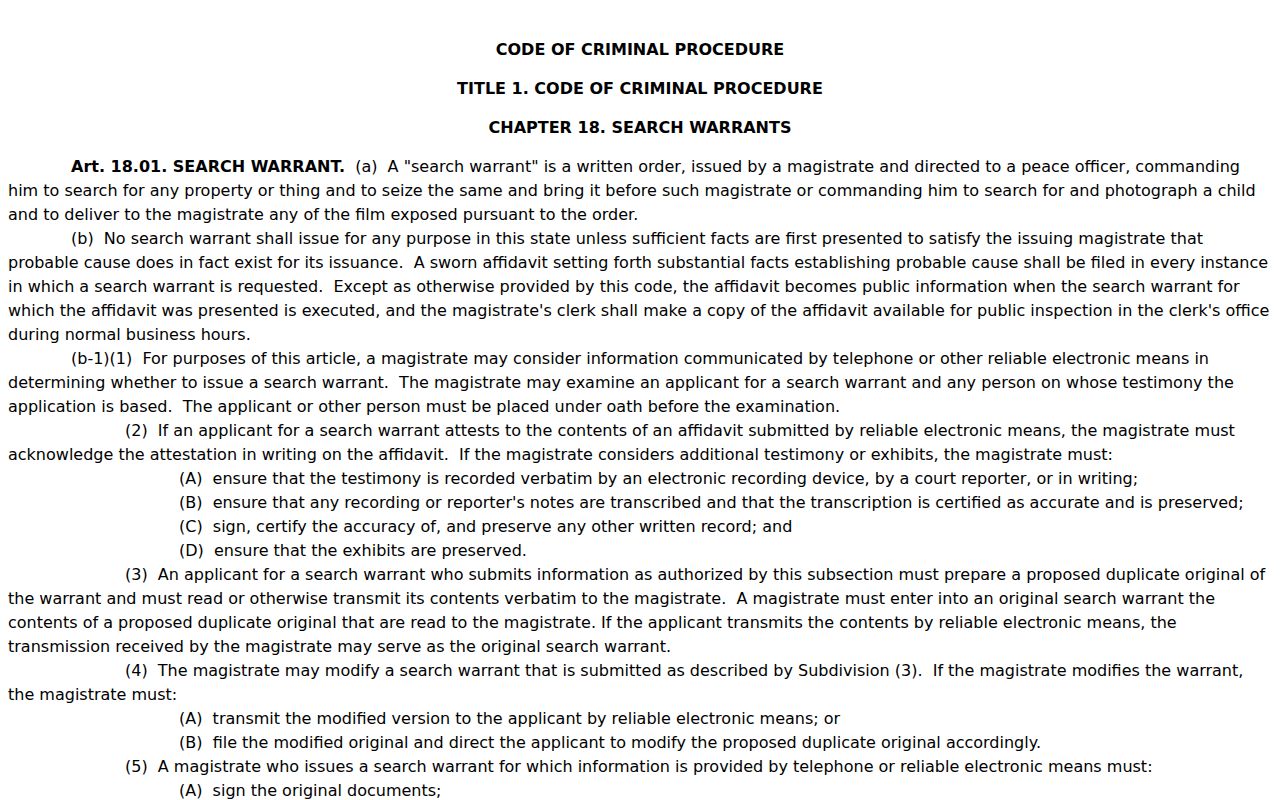
The linked statute governs searches of property in Mason County. It is not a self-check tool for arrest status.
Handling an Arrest Warrant in Your Name
Find out which court issued the Mason County warrant before you drive anywhere, and confirm its current status with that court. That single call shapes everything else. For a District Court matter, call the District Court or the District Clerk and ask whether counsel should file a motion or set an appearance. For a lower-court warrant, call the issuing court and ask about a voluntary appearance plus the statutory recall rules. Only the court or magistrate can state a bond amount. Mason has no public countywide bond schedule. Whatever the court directs, appearance, payment, or bond, get written confirmation that the warrant was recalled and note the next setting. Posting bond secures release, but it does not end the underlying case. The county page gathers the local steps for handling a Mason County warrant in one place.
Important: A possible arrest warrant can lead to custody during law-enforcement contact; speak with counsel and the issuing court before appearing.
Mason County Appearance Questions
Call the Mason County court before any voluntary appearance. Ask whether the appearance must be scheduled and whether a motion is required. Ask which building to use, whether custody or booking is possible, what identification to bring, and how bond gets handled if the judge orders it. No office in the county offers a guaranteed safe-surrender window, a jail bond counter, or a standard walk-through policy, so rely on what the court itself tells you. One more caution on the law. Chapter 45A gives recall protection for certain lower-court failure-to-appear warrants, but that statute is context, not a promise that an unscheduled appearance avoids arrest. The court can explain which subsection and local procedure fit the case.